Local Moves
Move locally with ease. Our team ensures a safe and efficient transfer of your items. Get a free quote and enjoy a hassle-free relocation!
Learn More


Moving across Calgary, heading elsewhere in Alberta or planning a long-distance move? Our Calgary movers handle home, condo, office, packing and storage moves from our southeast Calgary location.
(403) 879-1915Adrienne Levay
Great service when setting up the move. The movers themselves that arrived were communicative, followed instructions and were very friendly.
2 days ago
Ramona Maraj
⭐⭐⭐⭐⭐ **Two Small Men with Big Hearts — Calgary** Moving into a new home is a big deal, and it can also be incredibly stressful. I feel very fortunate that I had such a wonderful team of three movers helping me through the process. From the moment they arrived, they were friendly, professional, and incredibly respectful. They were right on time and kept me updated throughout the move, even letting me know when they were getting close. That communication meant a lot and helped take some of the stress out of moving day. They worked so well together — organized, efficient, and incredibly careful with everything they moved. I was especially impressed by the care they took with my belongings. **Nothing was broken, damaged, or mishandled.** They treated my things as though they were their own. When we arrived at my new home, they didn't just unload everything and leave. They took the time to make sure things were where I wanted them and that I was happy before they finished. That extra level of care really stood out to me. Moving is more than just boxes and furniture — you're moving a part of your life. Having three people who were so kind, patient, hardworking, and genuinely caring made a huge difference to me. **To the three gentlemen who helped me move, thank you from the bottom of my heart. You made a stressful day so much easier, and I truly appreciate the care you took with my belongings and my new home. You represented Two Small Men with Big Hearts beautifully.** I would wholeheartedly recommend them to anyone who is looking for movers who are not only professional and efficient, but who truly care about the people they are helping. ❤️ **Thank you for helping me get settled into my new home!** 🏡
2 days ago
Don Morine
Two good efficient guys and one guy with a phone constantly in one hand. Basically two guys doing most of the work. They are back to our house today to finish up with same crew and same individual can’t give up their phone.
2 days ago
Alexandria McKinley
Kalman and Rhythm were fantastic! They were efficient, careful, professional, and took great care with both our furniture and our home — not a single damaged wall or piece of furniture. I’ve actually worked with Two Small Men for years through my job and have used their team for countless showhome moves, so I already knew we were in good hands when choosing them for our personal move. My experience has consistently been positive, and this move was no exception. Kalman and Rhythm worked incredibly hard, kept everything moving smoothly, and made what could have been a stressful day feel easy. Would absolutely recommend them and Two Small Men!
a week ago
Nitanis Weenonis
They were awesome they showed up on time and for a almost 6 hour move it wasn't to pricey like other places i tried to call
a week ago
Leigh Middleton
Great service and arrived on time. The two movers were very friendly and helpful. They did a good job communicating and organizing my service.
2 weeks ago
At Two Small Men with Big Hearts we offer a wide variety of moving services to help with your move in, to, or out of Calgary. Whether your moving down the street and require our local moving services for moves within Calgary and nearby communities, or long-distance moving when you are leaving the area.
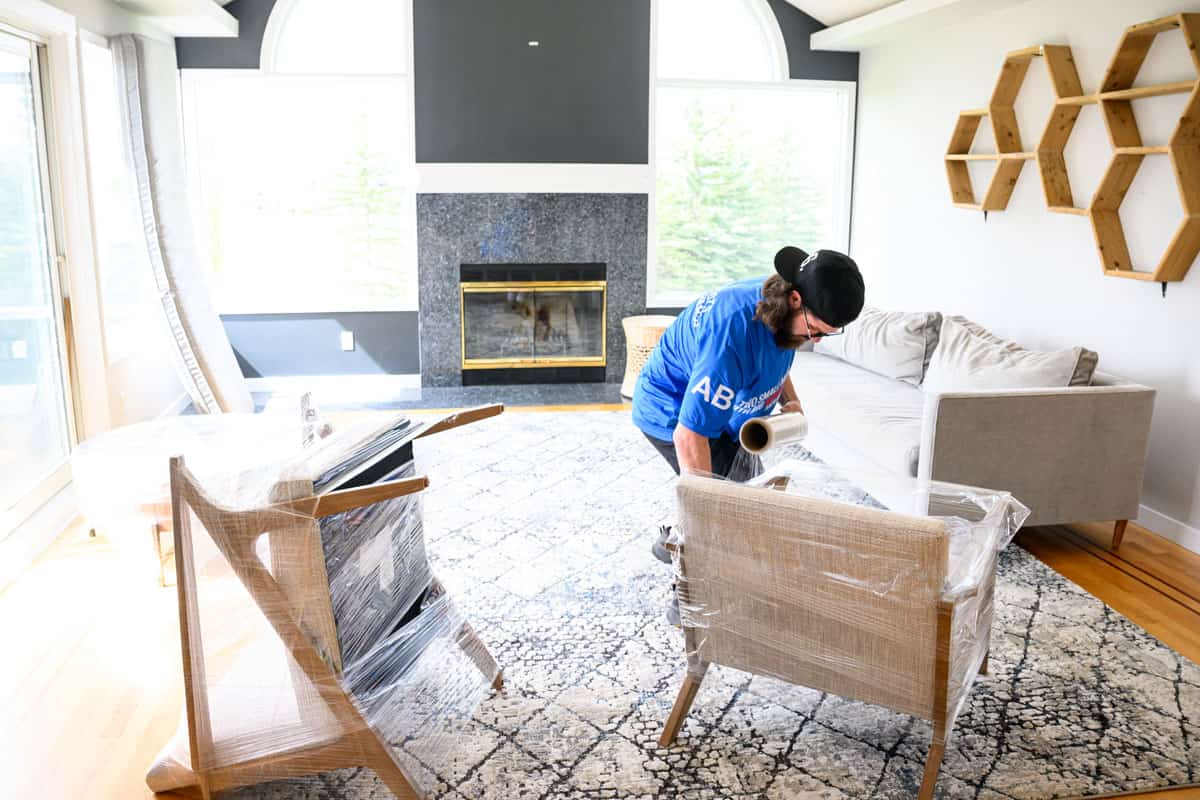
Some of our customers choose to add packing support to their move. Our packing services can cover a few fragile items or the whole home.
If you need Storage between homes our move coordinators can also help you with that. Or maybe your downsizing and your looking for junk removal, our movers can clear out furniture or items you are not taking.
Two Small Men in Calgary also offers speciality services such as Senior moving (downsizing and setup), piano moving and special-item transport.
← Swipe for more services →
A brief overview based on thousands of moves from 2025. Most Calgary moves cost between ~$550–$2,500 depending on the size of the home and distance between pickup and dropoff.
| Home Size | Typical Cost |
|---|---|
| Studio / 1-bed | ~$550–$1,100 |
| 2–3 bedroom | ~$1,000–$1,800 |
| 4-bedroom | ~$1,700–$2,500 |
| Long-distance (avg) | ~$2,884 |
Calgary moves are more affordable than Toronto (~$1,693 avg) and on par with prairie cities. Check out our Cost of Moving in Calgary Article for a full breakdown of the current costs to move in Calgary.
What Will Your Move Cost?
These are just ballpark ranges. For a real number, get a free quote for your place — it takes about two minutes.
We may be biased but we believe Two Small Men with Big Hearts is one of the best and most reputable moving companies in Calgary. Our team of professional movers has been moving Canadians since 1982 and we have the expertise and knowledge required to handle any kind of move whether it be:
a local move
long distance
Two Small Men with Big Hearts was founded on the principles of quality service, honesty and reliability. So as to provide the best moving services, we use specialized equipment and packing supplies to ensure that your valuables are moved safely and securely.
Our team of professional movers in Calgary will pack, load and unload your belongings whenever you need our services.
We are proud to be a part of the Calgary community and we are committed to offering a stress-free moving experience to all our clients. Wherever and whenever you are planning to move, we're here for you.
Tell us about your move and we'll put together a quote. No obligation.
Get Your Free QuoteOr call (403) 879-1915
Two Small Men with Big Hearts has been helping move Canadians since 1982. Our Calgary movers are known across Western Canada for their 5 Star Rated long distance moves . Our movers will pack, load, transport, and deliver your home or office, whether you're moving to Edmonton, Kelowna, Vancouver, or east to Saskatoon, or Winnipeg.
All Two Small Men long-distance moves start with a detailed quote, so you know the cost upfront, with no hidden fees or surprise charges.
We also offer packing, and storage!
Choose your route below for distance and transit time, or get a free long-distance quote from our Calgary team.
The movers at Two Small Men in Calgary also service cities nearby.
Two Small Men with Big Hearts also has physical locations in many other cities across Alberta.
Common questions about our moving services
All of Calgary as well as
Airdrie
Cochrane
Chestermere
Okotoks
You should choose Two Small Men Because we care about our customers, community, and every move we do.
Yes, Two Small Men moves all year round.
It comes down to the size of your home, how far you're going, and any extras like packing. Most local Calgary moves land between $550 and $2,500. The only way to know your number is a real quote — it's free, upfront, with no hidden fees, and takes about two minutes. Get your free quote.
Still have questions? Contact our team
← Swipe for more →
Professional moving services across 51 neighbourhoods in Calgary and surrounding areas
Two Small Men with Big Hearts in Calgary, Alberta services over 51 Calgary neighbourhoods. This includes condos Downtown, as well as in Eau Claire and along the Beltline. We also provide moves to older inner-city areas like Altadore, Elbow Park and Bridgeland/Riverside.
No matter what neighbourhood you live in our moving services stay the same. We pack carefully, wrap furniture and fragile items.
Search for your neighbourhood or browse the list below.
Hours of Operation
Monday
7:00 AM - 7:00 PM
Tuesday
7:00 AM - 7:00 PM
Wednesday
7:00 AM - 7:00 PM
Thursday
7:00 AM - 7:00 PM
Friday
7:00 AM - 7:00 PM
Saturday
8:00 AM - 5:30 PM
Sunday
8:00 AM - 5:30 PM